University of California Press

About the Book

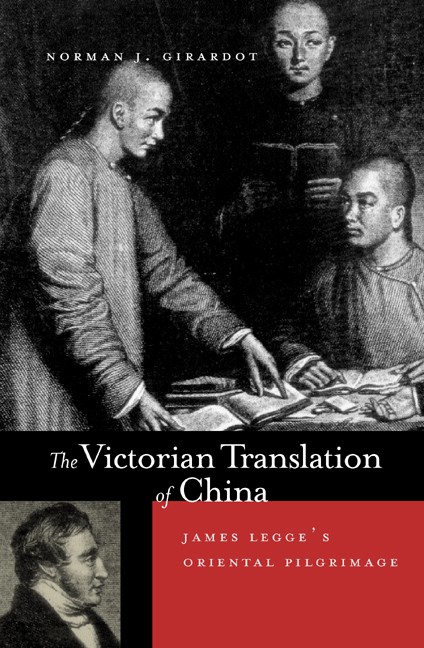
In this magisterial study, Norman J. Girardot focuses on James Legge (1815-1897), one of the most important nineteenth-century figures in the cultural exchange between China and the West. A translator-transformer of Chinese texts, Legge was a pioneering cross-cultural pilgrim within missionary circles in China and within the academic world of Oxford University. By tracing Legge's career and his close association with Max Müller (1823-1900), Girardot elegantly brings a biographically embodied approach to the intellectual history of two important aspects of the emergent "human sciences" at the end of the nineteenth century: sinology and comparative religions.

Girardot weaves a captivating narrative that illuminates the era in which Legge lived as well as the surroundings in which he worked. His encyclopedic knowledge of pertinent figures, documents, peculiar ideologies, and even the personal quirks of principal and minor players brings the world of imperial China and Victorian England very much to life. At the same time, Girardot gets at the roots of much of the twentieth-century discourse about the strange religious or nonreligious otherness of China.

About the Author

Norman J. Girardot is University Distinguished Professor in the Religious Studies Department at Lehigh University. His previous books include Myth and Meaning in Early Taoism (California, 1983).

Table of Contents

List of Illustrations
Preface
Acknowledgments
Note to the Reader on Transcription and Romanization
Introduction: The Strange Saga of Missionary Tradition, Sinological Orientalism, and the Comparative Science of Religions in the Nineteenth Century
Prologue: Missionary Hyphenations West and East, 1815–1869
1. Pilgrim Legge and the Journey to the West, 1870–1874
2. Professor Legge at Oxford University, 1875–1876
Appendix to Chapter 2: Caricatures of Max Müller and James Legge at Oxford
3. Heretic Legge: Relating Confucianism and Christianity, 1877–1878
4. Decipherer Legge: Finding the Sacred in the Chinese Classics, 1879–1880
5. Comparativist Legge: Describing and Comparing the Religions of China, 1880–1882
6. Translator Legge: Closing the Confucian Canon, 1882–1885
7. Ancestor Legge: Translating Buddhism and Daoism, 1886–1892
8. Teacher Legge: Upholding the Whole Duty of Man, 1893–1897
Conclusion: Darker Labyrinths: Transforming Missionary Tradition, Sinological Orientalism, and the Comparative Science of Religions after the Turn of the Century
Appendix A. Max Müller’s Motto for The Sacred Books of the East
Appendix B. James Legge’s Oxford Lectures and Courses, 1876–1897
Appendix C. Principal Publications of James Legge and Max Müller
Appendix D. Genealogy of the Legge Family
Notes
Bibliographical Note
Index

Reviews

“A magnificent book, learned and witty (and specializing in the author’s own brand of self-deprecating humor), with trails leading off into obscure and fascinating corners of Victorian life. . . . This book on Legge’s intellectual career and ethos is magisterial, urbane, very scholarly, and likely to remain definitive for a long time to come.”
Taipei Times
“A rich account of Legge’s life and work...a story well worth telling and reading.”
Journal Of Religion & Society
“A vast study... The Victorian Translation of China is several substantial books packed into one.”
Times Literary Supplement (TLS)
"Norman J. Girardot's The Victorian Translation of China: James Legge's Oriental Pilgrimage is breathtaking in its scope. James Legge was a giant in Sinology; only a monumental volume such as this one could do justice to him. The publication of this biography of Legge is a major event, not just for the history of Sinology, but for the intellectual history of the late 19th century in general. Indeed, in a sense, the book is almost as much about the great Indologist and comparative philologist Max Müller as it is about the Christian missionary from Aberdeen who produced such epochal translations of the Chinese classics in Hong Kong and at Oxford. Partly inspired by Lytton Strachey’s trenchant insights of into the Victorian mind and character, Girardot's masterpiece deserves to be ranked with the finest examples of the craft of writing about influential persons and interesting eras. But it is more than that; quite simply, this is one of the most outstanding academic biographies of all time and in any field."—Victor H. Mair, translator of Tao Te Ching: The Classic Book of Integrity and the Way and Wandering on the Way: Early Taoist Tales and Parables of Chuang Tzu.

"Through a densely annotated translation of the entire Confucian canon and two seminal Daoist texts, James Legge is the single most important individual in making the historical classics of Chinese history and philosophy known to English readership, and through it to the entire Western world. Norman Girardot’s study, surpassing all previous efforts in chronicling the person and assessing Legge’s legacy, is itself a monumental achievement in research, interpretation, and writing. The focalized discussion of the subject in terms of the scholar as missionary, the development of Sinological Orientalism, and the rise and growth of the Comparative Science of Religions or Religionswissenschaft provides unrivalled enormity of scope and depth of understanding. The Victorian Translation of China will remain a definitive work for decades to come."—Anthony C. Yu, author most recently of Rereading the Stone: Desire and the Making of Fiction in Dream of the Red Chamber.

Awards

  • Book Award in the Historical Study of Religion 2003, American Academy of Religion
  • John K. Fairbank Prize 2003, American Historical Association